 how-to
What Is the 30% Rule for Renovations?
Last Updated: November 2, 2026
Quick Summary
The 30% rule caps total renovation spending at roughly 30% of your home's current market value. We treat it as a ceiling, not a target, so a remodel stays in line with what your neighborhood can support. On a $600,000 home, that limit is $180,000.
- Start with a defensible market value from three to five recent comparable sales, a CMA, or an appraisal.
- Reserve 10% contingency for a cosmetic remodel and 15-20% for structural, plumbing, electrical, or older-home work.
- Get at least three itemized bids from licensed contractors with allowances schedules and change-order rates.
- Stress-test the winning bid by adding 10% and confirming it still fits under the 30% ceiling.
- Safety and structure projects like roof replacement and foundation repair can justify spending near or above the guideline.
Table of Contents
- How the 30% Rule Sets Your Renovation Budget Rule of Thumb
- How Much to Spend on Home Renovations: A Step-by-Step Cost Estimate
- Why Your Renovation Budget Contingency Belongs Inside the Limit
- Home Renovation Return on Investment and the Over-Improving Risk
- Frequently Asked Questions
How the 30% Rule Sets Your Renovation Budget Rule of Thumb
The 30% rule caps total renovation spending at roughly 30% of your home's current market value. At Apex Building Group, we explain it as a ceiling, not a target, it keeps a remodel in line with what your neighborhood can support.
Here is the math on a $600,000 home:
- Budget limit: $180,000
- Typical kitchen or bathroom remodel: a fraction of that
- Whole-home renovation: where the full limit applies
A common mistake is treating the 30% rule as permission to spend. It is a guardrail. Most homeowners spend well under it on a single room.
How Much to Spend on Home Renovations: A Step-by-Step Cost Estimate
Start with your home value, not your wish list. These steps turn the 30% rule into a real number you can hand a contractor, with contingency and scope built in.
- Establish a defensible current market value. Pull three to five recent comparable sales (same subdivision or within roughly a mile, similar square footage, bed/bath count, lot size, and condition, closed in the last six months). Ask a licensed real estate agent for a comparative market analysis, or order an appraisal if the number will anchor a large project or a loan. Average the low and high of your comps and round down.
- Multiply by 0.30 to get your total project limit. On a $600,000 home that is $180,000, a ceiling, not a spending target.
- Reserve contingency inside the limit. Set aside 10% for a cosmetic remodel and 15-20% for anything touching structure, plumbing, electrical, or an older home. On the $600,000 example with a 15% reserve, $27,000 is held back and $153,000 is available for planned scope.
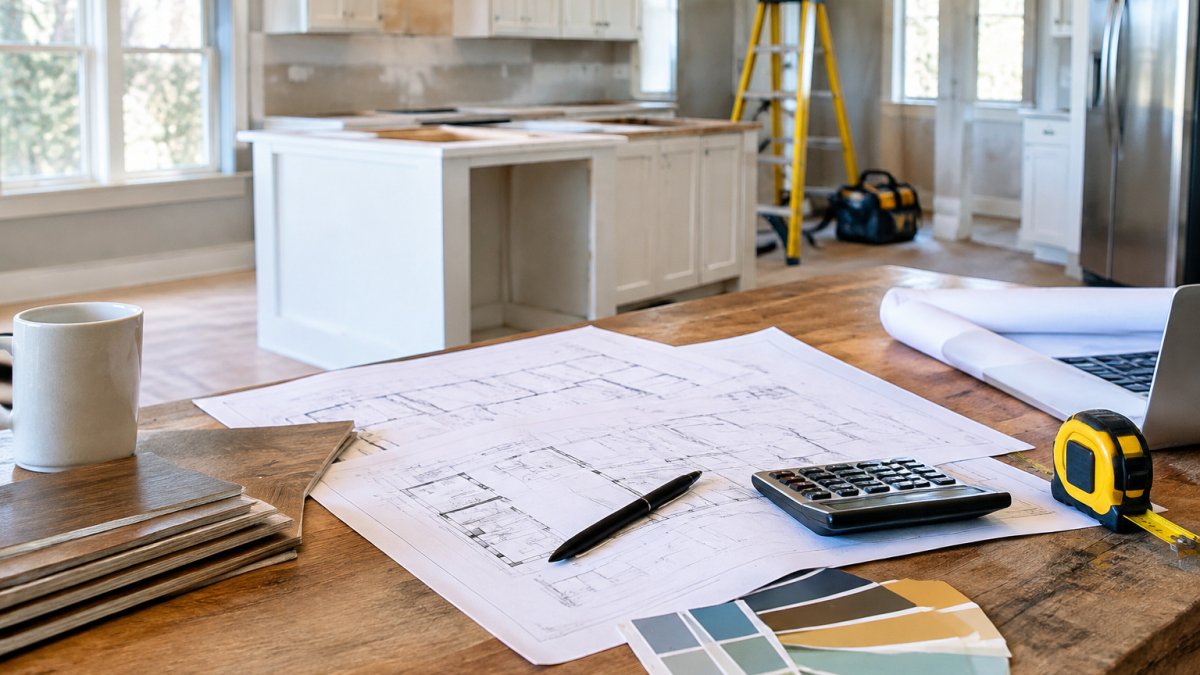
- Define scope line by line. List each room and trade (demo, framing, rough plumbing, rough electrical, HVAC, drywall, finishes, fixtures) with a quantity and unit so bids are comparable.
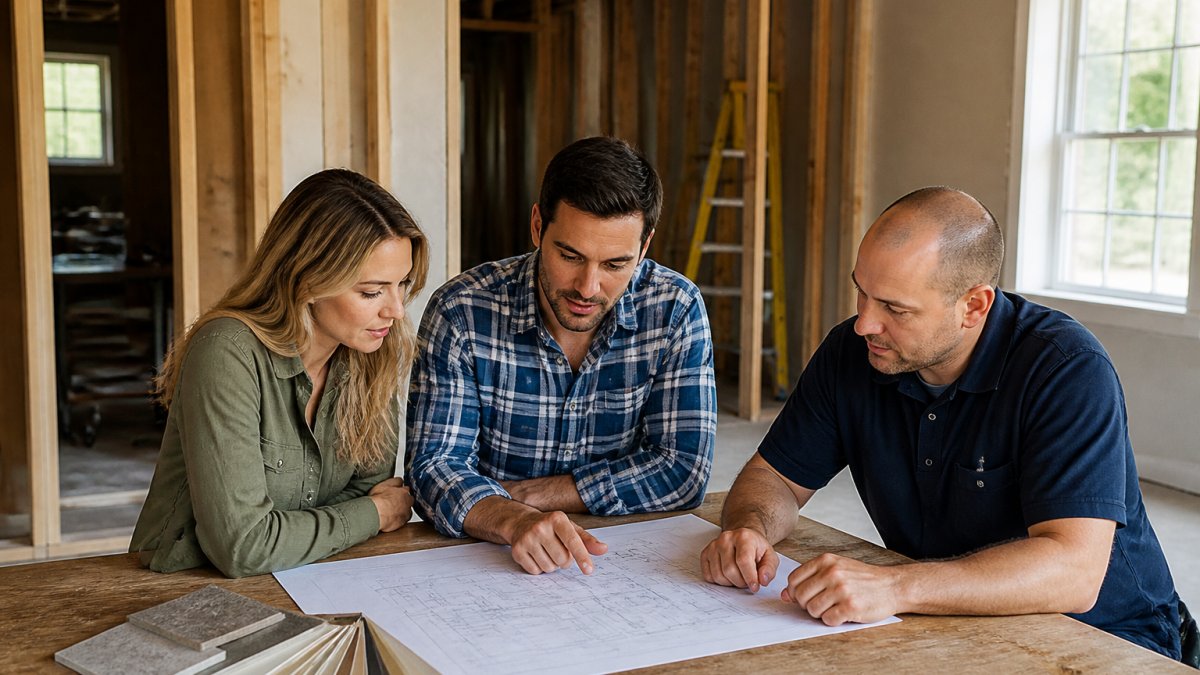
- Get at least three itemized bids from licensed contractors. Require a line-item breakdown, an allowances schedule, a stated schedule, and a change-order rate; lump-sum bids hide the allowances that cause overruns.
- Compare each bid to your available scope budget (limit minus contingency), not to each other alone. The lowest bid that fits the scope and the reserve wins.
- Stress-test the plan. Add 10% to the winning bid and confirm it still fits under the 30% ceiling. If not, cut scope now rather than mid-build.
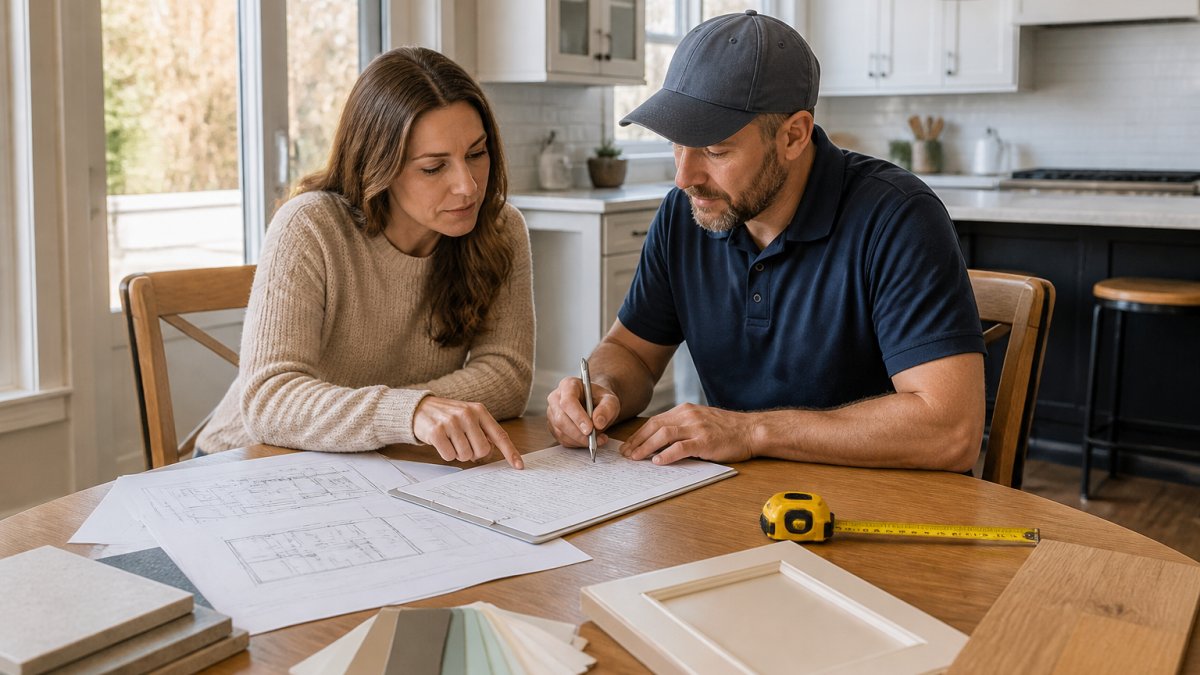
Watch out: a portal estimate that is 10% high inflates your 30% ceiling by the same amount, which is why the value step uses closed sales rather than an automated range.
For local figures, see how much a home addition costs in Massachusetts. When your estimate is ready, request a free construction estimate to confirm the numbers.
| Step | What You Do | Why It Matters |
|---|---|---|
| 1 | Confirm value from closed comps, a CMA, or an appraisal | Anchors the whole budget to a defensible number |
| 2 | Multiply by 30% | Sets your hard ceiling |
| 3 | Hold 10-20% contingency inside the limit | Absorbs normal overruns without breaking the rule |
| 4 | Define scope by room and trade with quantities | Makes bids comparable and exposes scope creep |
| 5 | Collect three itemized bids | Tests the market and reveals allowances |
| 6 | Compare to limit minus contingency | Prevents over-improving and reserve raids |
| 7 | Stress-test with a 10% add-on | Confirms the plan survives reality |
Why Your Renovation Budget Contingency Belongs Inside the Limit
A renovation budget contingency is a reserve for unexpected expenses, and it belongs inside your 30% limit, not on top of it. Ten to twenty percent is a common approach.
Because cost overruns are normal, structural repairs, permit delays, material substitutions, a contingency outside the limit quietly blows past the rule. For a complete walkthrough of hidden costs and permit factors, see the home addition guide for Greater Boston.
Subtract the contingency first, then plan with what remains.
Home Renovation Return on Investment and the Over-Improving Risk
Return on investment is a resale concept, and the 30% rule is a value concept; they meet at the over-improving line. The rule does not promise a return, it limits how much of your own money you put at risk above what the market is likely to pay back.
Minor kitchen and bathroom updates, exterior refresh (siding, windows, entry door, garage door), and energy or roof replacements tend to recoup a larger share of cost at resale than high-end kitchens, primary-suite additions, pools, and highly personalized finishes. Those ranges move with local demand, home condition, and the market at sale; treat any cost-recouped percentage as a planning range, not a promise.
Buyers comparison-shop within a price band set by nearby homes of similar size, age, and condition. If your renovation pushes your home well above that band, the market may not pay the premium, and you fund the gap at sale. Browsing the portfolio of completed projects helps readers gauge which renovation scopes deliver value without over-improving.
Use these criteria to decide whether a project belongs under the 30% ceiling or justifies an exception:
- Safety and structure first. Roof replacement, foundation repair, electrical service upgrades, and mold or water remediation protect the asset and occupants; these can justify spending near or above the guideline because deferring them costs more later.
- Long-term living needs. Accessibility modifications, aging-in-place features, and a home office you will use for years are consumption decisions as much as investment decisions; value them on use, not resale alone.
- Neighborhood fit. Match finish level to surrounding homes. If your block is full of updated kitchens, a comparable kitchen is table stakes; if not, a mid-grade update usually fits better than a luxury one.
- Local demand signals. Unusually strong demand for a specific feature in your submarket, an extra bathroom, a finished basement, a garage, can support spending closer to the ceiling, but confirm it with an agent's read of recent sales rather than a national average.
- Financing cost. If you borrow, add interest and fees to the project cost before comparing it to the 30% limit; a project that fits the ceiling can still strain cash flow once debt service is included.
Watch out: comparing your project's cost to a national cost-recouped average rather than to your own comps is the most common way homeowners talk themselves past the over-improving line.
Frequently Asked Questions
Does the 30% rule mean spending 30% of a home's value on renovations?
Yes. The 30% rule is a budgeting guideline that caps total renovation spending at roughly 30% of your home's current market value. On a $600,000 home, that puts the ceiling near $180,000. It is not a legal limit or a lending requirement. It is a guardrail against over-improving a property beyond what comparable homes in the neighborhood support at resale.
Should the 30% rule include a contingency fund?
Include it inside the limit, not on top of it. Set aside 10 to 20 percent of the project cost for unexpected expenses, then confirm the combined figure still lands under your 30% cap. A $150,000 ceiling with a 15 percent contingency means planning roughly $130,000 of actual work. That approach protects your cash flow when hidden structural repairs or permit delays surface mid-project.
How do you calculate a renovation budget using the 30% rule?
Start with a reliable current home value from an appraisal or recent comparable sales. Multiply by 0.30 to get your budget limit. Subtract your contingency, then split the remainder across your project scope: kitchen, bathroom, and structural work. Get multiple bids from licensed contractors and compare line items for labor, materials, and permits. If the bids exceed the remainder, cut scope rather than the contingency.
The 30% rule only works when the numbers behind it are accurate. That starts with a reliable home value and a contractor who scopes the work honestly. Apex Building Group brings licensed and insured general contracting, expert project management from start to finish, and customized solutions tailored to your home and budget. Get started with Apex Building Group and turn your renovation plan into a buildable budget.